


If I Could Only Recommend Three Supplements...

Supplements: Part One - The Grocery Bag
Every week, without fail, I ask a new patient the same question: "What supplements are you taking?"
The answers usually fall into one of two categories:
Patient 1 quietly says, "None."
Patient 2 walks into the office carrying what looks suspiciously like enough supplements to stock a small health food store. Twenty-three bottles. Four different companies. Three multivitamins. Two probiotics. Five products that all contain magnesium...
...and nobody knows they're taking magnesium five different times.
I smile. "Let's simplify."
Because contrary to what social media would have you believe... health rarely comes from taking more. It usually comes from taking the right things.
Then I thought of my chickens...

Last week I walked out to collect eggs. We have three nesting boxes. Only... Georgette and Tofu had decided they absolutely HAD to lay their eggs in the SAME nesting box.
Meanwhile... the other two nesting boxes sat completely empty.
I stood there laughing.
Then it hit me... this is exactly what some supplement regimens look like. Everything is trying to do the same job. Multiple products. Duplicate ingredients. Too much of one thing, not enough of another.
My job isn't to add another bottle. It's usually to remove several. I almost always want my patients to start taking the same three:
🥇 Vitamin D
🥈 Omega-3 Fatty Acids
🥉 Magnesium Glycinate
These three support hundreds of normal physiologic processes that become even more important during cancer treatment.
No, they don't cure cancer, but they help create a healthier internal terrain where the body can better tolerate treatment, recover, and thrive.
Before We Go Any Further...
Not all supplements deserve your money.
At MedLogic Medicine we carefully evaluate every supplement and every manufacturer we recommend. Purity. Potency. Absorption. Third-party testing. Manufacturing standards.
I also use independent resources such as ConsumerLab.com because my patients deserve supplements that contain exactly what the label says they contain.
The goal isn't simply taking a supplement; it’s absorbing it.
Number 1 - Vitamin D: Much More Than a Vitamin
Vitamin D is one of the few supplements I recommend to nearly every patient because it functions more like a hormone than a vitamin, influencing thousands of genes involved in immune regulation, inflammation, bone health, muscle function, and overall metabolic health. Nearly every cell in the body, including those of the immune system, contain vitamin D receptors, highlighting its broad role in maintaining health.
Research suggests vitamin D helps regulate both the innate and adaptive immune systems, supports healthy cell differentiation, and promotes a healthy inflammatory balance. While laboratory and observational studies suggest vitamin D may also influence cellular growth and repair, its exact role in improving cancer outcomes continues to be actively studied.
Rather than recommending the same dose for everyone, I individualize vitamin D supplementation based on each patient's diagnosis, laboratory values, and overall health. While a blood level of 30 ng/mL is often considered adequate for bone health, I frequently target a 25-hydroxyvitamin D level of approximately 70–100 ng/mL for many patients with cancer, provided this can be achieved safely with ongoing monitoring of calcium levels, kidney function, and repeat vitamin D testing. Although this target is higher than that recommended by most conventional guidelines and definitive evidence linking these levels to improved cancer outcomes is still evolving, I believe optimizing vitamin D is an important part of supporting immune function, metabolic health, muscle strength, bone health, mood, and creating the healthiest possible internal terrain during and after cancer treatment.
Number 2 - Omega-3
I Owe My Dad an Apology.
My dad became a homeopathic physician later in his career. Long before fish oil became popular he was trying to convince me to take it. Unfortunately, fish oil back then tasted exactly like...fish! The capsules repeated on me. The liquid repeated on me. I burped fish for what felt like an entire afternoon. Needless to say, I wasn't exactly eager for my next dose.
Fast forward several decades and I still can't believe these words are coming out of my mouth: Orthomolecular somehow managed to make a mango-flavored omega-3 that actually tastes...good. Who knew?
So yes, I'm going to get you to take your omega-3s. They're simply too important not to.

The SMASH Conversation
One of my favorite conversations in clinic goes something like this.
Me: "The best dietary source of omega-3s is SMASH fish."
Patient: "SMASH?"
Me: Salmon.Mackerel. Anchovies. Sardines. Herring.
Then comes... the face.
🤣🤣🤣
You know the one. The face that says, “Over my dead body.”
Don't worry. That's exactly why high-quality supplements exist.
Omega-3 fatty acids are among the most extensively studied nutrients in medicine and are one of the three supplements I recommend to nearly every patient. Because our bodies cannot produce them, they must come from our diet or supplementation.
Unfortunately, many people consume very little fatty fish while eating large amounts of processed foods and omega-6-rich seed oils, creating an imbalance that may contribute to chronic inflammation. Omega-3 fatty acids support healthy cell membranes, brain and cardiovascular health, immune function, cognitive performance, joint health, muscle recovery and metabolic health.
In cancer care, they have also been associated with improved quality of life, preservation of muscle mass in patients with cancer cachexia, and reduced inflammation, making them an important part of many personalized integrative treatment plans.
Research continues to explore the role of omega-3 fatty acids in cancer prevention and supportive cancer care. Laboratory and clinical studies suggest they may influence pathways involved in inflammation, immune regulation, and healthy cell signaling, and they have shown promise as an adjunct to conventional therapies in several cancers, including breast, colorectal, prostate, liver, and lung cancers. While additional research is needed to define their role in improving cancer-specific outcomes, the overall evidence supporting their benefits for general health and supportive oncology is compelling.
Number 3 - Magnesium: Your Body’s Right-Hand Man
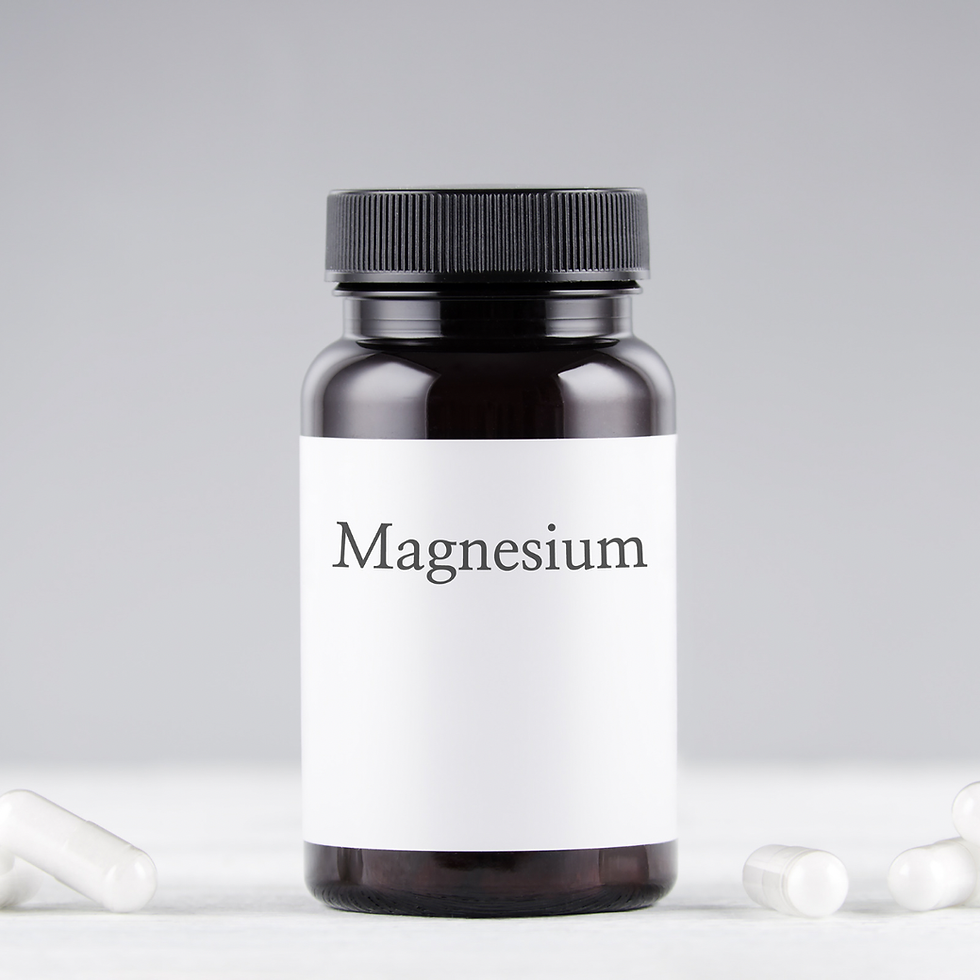
Magnesium is involved in more than 300 enzymatic reactions throughout the body and is essential for energy production, DNA repair, protein synthesis, muscle and nerve function, heart health, and healthy blood sugar regulation.
Unfortunately, many people don't get enough magnesium from their diet, and patients undergoing cancer treatment are at even greater risk for deficiency due to poor appetite, gastrointestinal side effects, certain medications, and chemotherapy.
I recommend magnesium glycinate because it is one of the most bioavailable and well-tolerated forms, providing excellent absorption while being much less likely to cause diarrhea than many other magnesium supplements. It also plays an important role in activating vitamin D, making these two supplements excellent partners.
Magnesium doesn't treat cancer directly, but it helps support the body's normal physiology during and after treatment. Adequate magnesium promotes restful sleep, muscle relaxation, stress resilience, healthy nerve function, cardiovascular health, and efficient cellular energy production. It may also help reduce muscle cramps, constipation, headaches, and fatigue, while supporting recovery in patients receiving treatments known to lower magnesium levels, such as platinum-based chemotherapy or certain targeted therapies.
My goal is to optimize the body's ability to heal, tolerate treatment, and create the healthiest possible internal terrain. That's why magnesium glycinate is one of the three foundational supplements I recommend to many of my patients.
One More Thing...
One aspect of my practice that patients often appreciate is that I do not rely on a single source of information.
I read conventional medical literature.
I follow integrative and lifestyle medicine research.
I also pay attention to thoughtful work from the field of naturopathic medicine, particularly where nutrition, supplementation, and supportive cancer care are discussed with care and clinical nuance.
One educator whose work I appreciate is Dr. Amanda King, ND, a naturopathic physician in the United Kingdom. While I never automatically adopt recommendations from any single source - whether conventional, integrative, or naturopathic - I value voices that help explain complex nutritional science in a way that encourages critical thinking.
My approach is to thoughtfully integrate the best available evidence from conventional oncology, holistic medicine, lifestyle medicine, and supportive nutrition to create a personalized plan for each patient.
This is also why I practice integrative medicine not alternative medicine. Alternative medicine often implies replacing conventional cancer treatment. That is not my philosophy.
The goal is not to choose one system over another. The goal is to support the whole person with clarity, safety, and evidence-informed care.
If you'd like to learn more about my approach, you can schedule a complimentary 15-minute Discovery Call with me, Dr. Jenn Ron, here on my Discovery Call calendar.
Stay Tuned for Part 2…
Patients are often surprised when I tell them there are two supplements I rarely recommend routinely during active cancer treatment.
We’ll unpack both of them in Supplements: Part Two including why they may be helpful for some patients, but not appropriate for everyone.


Comments